






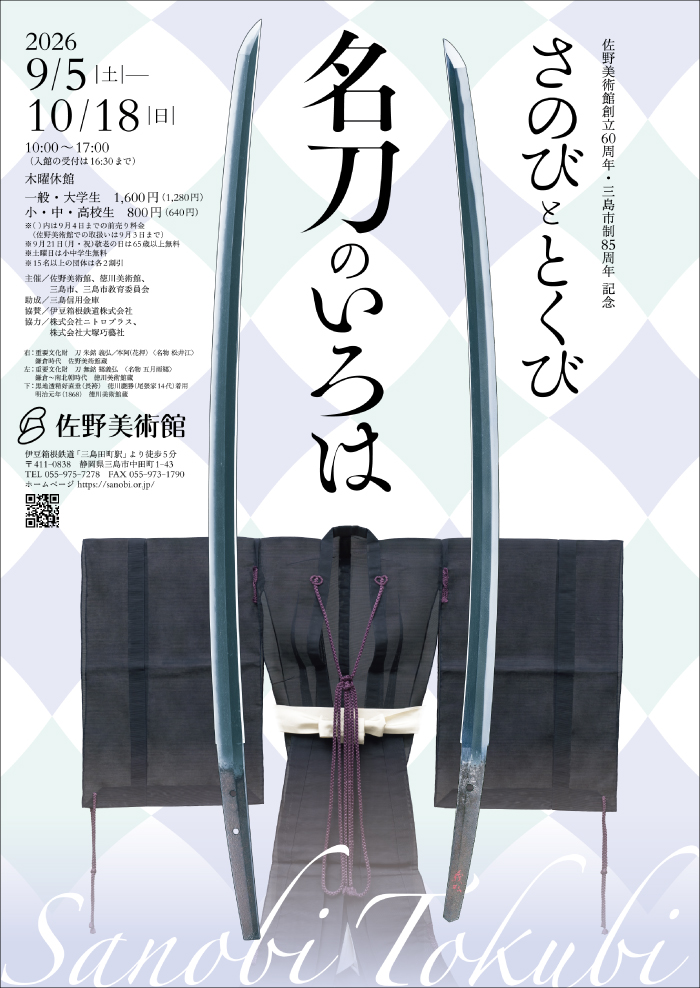
Sano Art Museum and the Tokugawa Art Museum present,
Exploring the Japanese Celebrated Swords Commemorating the 60th Anniversary of Sano Art Museum and the 85th Anniversary of the City of Mishima
The Sano Art Museum (“Sanobi”) and the Tokugawa Art Museum (“Tokubi”) come together to present an exhibition that explores the fundamentals—the iroha—of appreciating Japanese swords by comparing and viewing highlights from both collections side by side.
Chapter 1, "The Beauty of Japanese Swords: Form," traces the evolution of swords in line with the tactics of each era. Chapter 2, "The Beauty of Japanese Swords: Steel and Blade Pattern," showcases the steel and blade patterns—the highlights of Japanese swords—through masterpieces. Chapter 3, "Japanese Swords and Samurai," focuses on the cultural aspects of swords.
This exhibition welcomes everyone—from first‑time visitors to long‑time enthusiasts—to enjoy Japanese swords from multiple perspectives.
The three famous swordsmiths known as Toshiro Yoshimitsu, Goro Nyudo Masamune, and Go Yoshihiro will be on display from the collections of both museums.
Main Exhibits
National Treasure, Tachi, Signed: Masatsune, Heian period, Collection of the Tokugawa Art Museum
National Treasure, Tachi, Signed: Ichi, Kamakura period, Private Collection
National Treasure, Tachi, Signed: Nagamitsu, (Meibutsu Tsuda Tōtōmi Nagamitsu), Kamakura period, Collection of the Tokugawa Art Museum
Important Cultural Property, Tachi, Signed: Rai Kunimitsu, Kamakura period, Collection of the Tokugawa Art Museum
National Treasure, Tachi, Signed: Rai Magotarō saku / (kaō) Sho'o 5-nen jinshin 8-gatsu 13-nichi, Kamakura period, Collection of the Tokugawa Art Museum
Important Cultural Property, Katana, Gold-inlaid Signed: Masamune suriage / Hon’ami (kaō), (Meibutsu Ikeda Masamune), Kamakura period, Collection of the Tokugawa Art Museum
Important Cultural Property, Katana, Unsigned (attributed to Masamune), Kamakura period, Collection of the Sano Art Museum
IImportant Cultural Property, Tanto, Signed: Masamune, (Meibutsu Fudō Masamune), Kamakura period, Collection of the Tokugawa Art Museum
Important Cultural Property: Sword, Vermilion Signed: Yoshihiro/Hon'ami (kaō), (Meibutsu Matsui-go), Kamakura period, Collection of the Sano Art Museum
Important Cultural Property: Katana, Unsigned (attributed to Go Yoshihiro) , (Meibutsu Samidare Go), Kamakura to Nanbokuchō period, Collection of the Tokugawa Art Museum.
Important Cultural Property: Wakizashi, Unsigned, (Meibutsu Monoyoshi Sadamune), Nanbokuchō period, Collection of the Tokugawa Art Museum.
Outline
-
Admission
For this exhibition, re-entry is not permitted once you leave the museum.
Adults / University Students: ¥1,600
Elementary, Junior High, and High School Students: ¥800
※ Free admission for visitors aged 65 and over on September 21 (Respect for the Aged Day)
※ Free admission for elementary and junior high school students on Saturdays
※ A 20% discount is available for groups of 15 or more -
Advance Tickets (available until September 4, 2026)
Adults / University Students: ¥1,280
Elementary, Junior High, and High School Students: ¥640
Sales locations:
〇 Sano Art Museum (until September 3, 2026)
〇 Seven-Eleven (Ticket Pia / P Code: 687–500)
-
Discount Tickets (during the exhibition period)
Adults / University Students: ¥1,440
Elementary, Junior High, and High School Students: ¥720
Sales locations:
〇 Izu-Hakone Railway Sunzu Line staffed stations
〇 Seven-Eleven (Ticket Pia / P Code: 687–500) -
Opening Hours
10:00–17:00 (Last admission at 16:30) -
Closed Days
Thursdays -
Organizers
Sano Art Museum, The Tokugawa Art Museum, Mishima City, Mishima City Board of Education -
Grant Support
Mishima Shinkin Bank -
Publicity Support
Izu-Hakone Railway Co., Ltd. -
Cooperation
Nitroplus Co., Ltd., Otsuka Kogeisha Co., Ltd.
Main Exhibits
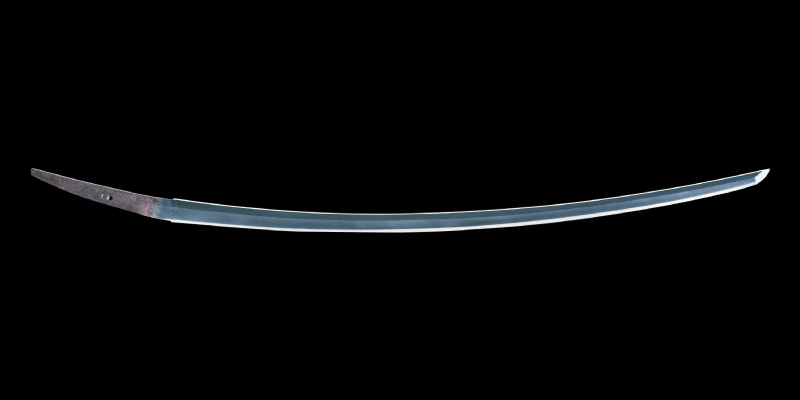
Important Cultural Property, Tachi, Signed: Bungo no Kuni Yukihira saku, Late Heian to early Kamakura period, Collection of Sano Art Museum
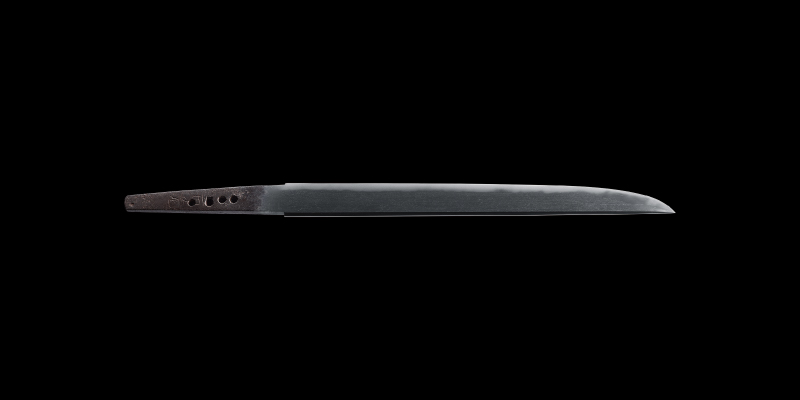
National Treasure, Tanto, Signed: Yoshimitsu (Meibutsu Gotō Tōshirō), Kamakura period, Collection of The Tokugawa Art Museum
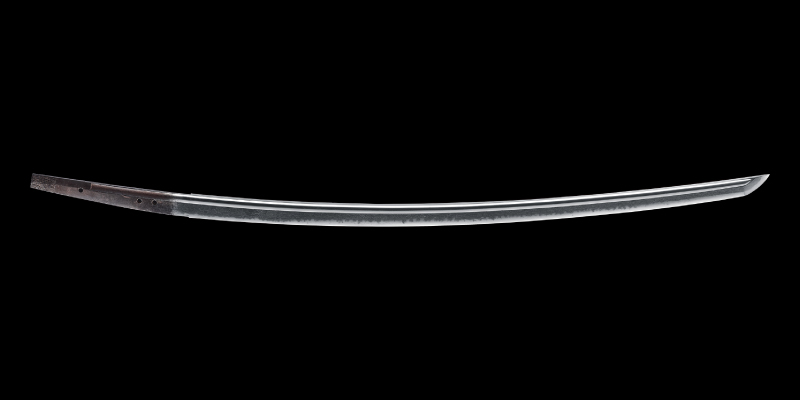
National Treasure, Tachi, Signed: Mitsutada, Kamakura period, Collection of The Tokugawa Art Museum
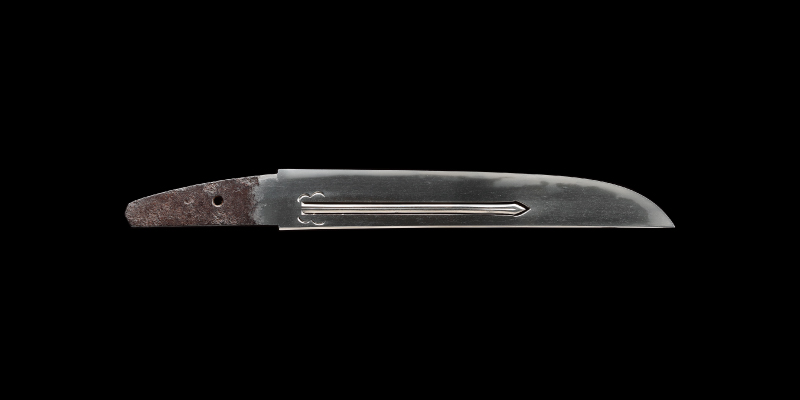
National Treasure: Tanto, Unsigned, (Meibutsu Hōchō Masamune) , Kamakura period, Collection of Tokugawa Art Museum.
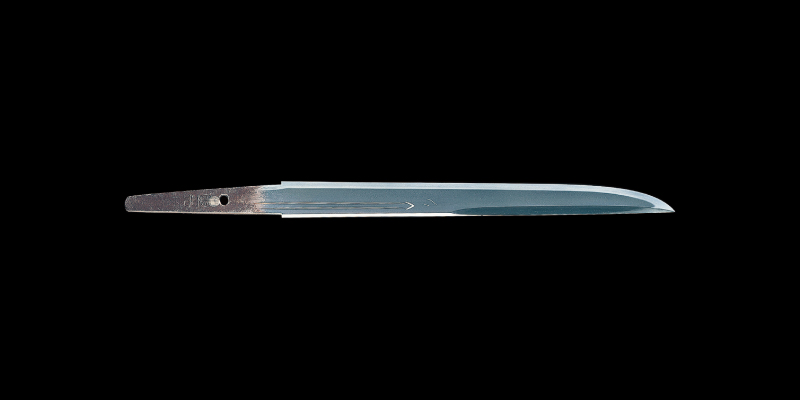
Important Cultural Property, Tanto, Signed: Kunimitsu, Kamakura period, Collection of Sano Art Museum
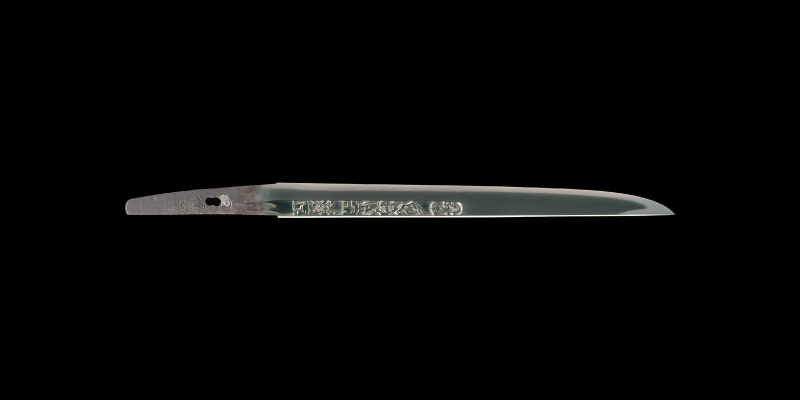
Tanto, Signed: Yukimitsu (Meibutsu Fudō Yukimitsu), Kamakura period, Private collection
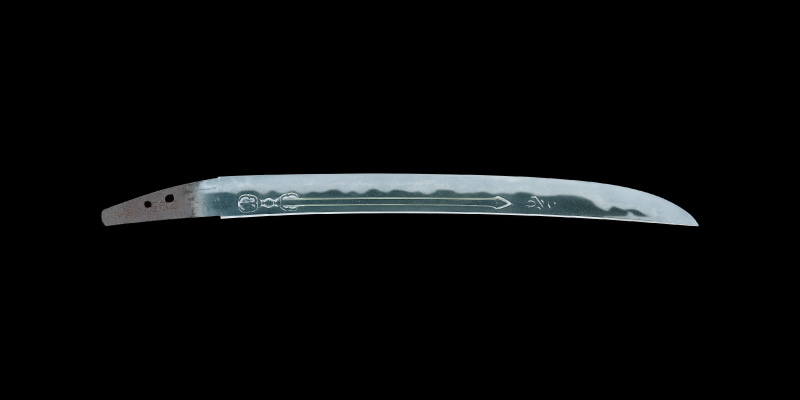
Important Art Object, Wakizashi, Signed: Sagami no Kuni jūnin Hiromitsu / Kōan 2 nen 10 gatsu hi, (known as Kashagiri), Nanbokuchō period, Collection of Sano Art Museum
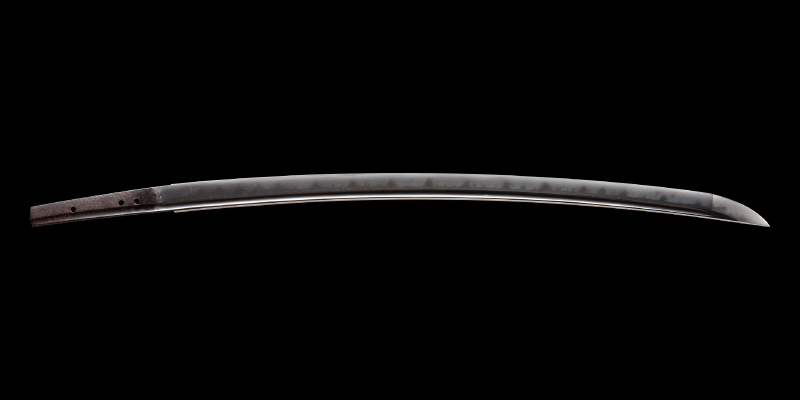
Important Cultural Property, Katana, Signed: Honsaku Nagayoshi, Tenshō 18 nen kanoetora 5 gatsu 3 ka ni Kyushu Hyuganokunihiro mei utsu / Nagao Shingorou Tairanoason Akinaga shoji Tenshō14 nen 4 gatsu 21 nichi Odawara sanpunotoki Yakata-sama yori kudashiokarerunari, Nanbokuchō period, Collection of The Tokugawa Art Museum
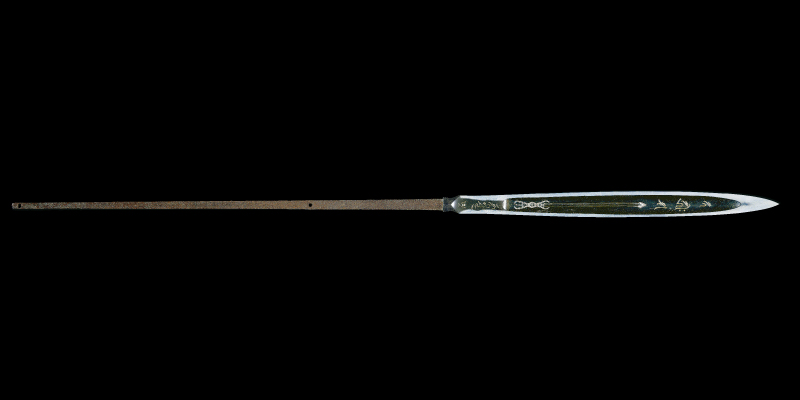
Yari, Signed: Fujiwara Masazane saku, (known as Tonbogiri), Muromachi period, Private collection
©2015 EXNOA LLC/NITRO PLUS
"Sano Art Museum and the Tokugawa Art Museum present, Exploring the Japanese Celebrated Swords" x "Touken Ranbu ONLINE" Collaboration
Period: Saturday, September 5 – Sunday, October 18
Please check theSpecial site andofficial X account for details!
Photography Policy
Exhibition Merchandise
Explore a wide selection of sword-related books, led by the exhibition catalog featuring masterpieces and research from both the Sano Art Museum and the Tokugawa Art Museum. New items have been added to our original "Sanobi" (Sano Art Museum) collection! Popular favorites such as life-sized sword cushions, ticket holders, and postcards are all on display.
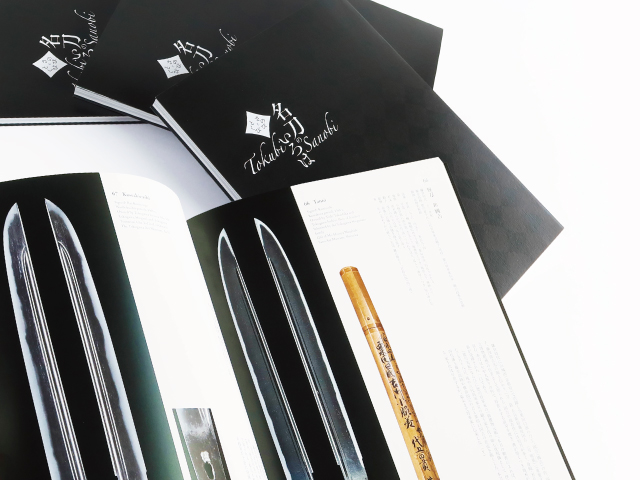
Exhibition CatalogueOnline StoreAvailable on our online store
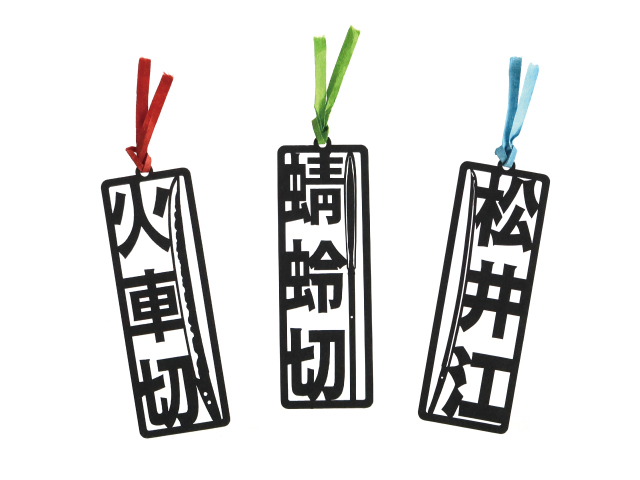
Bookmark
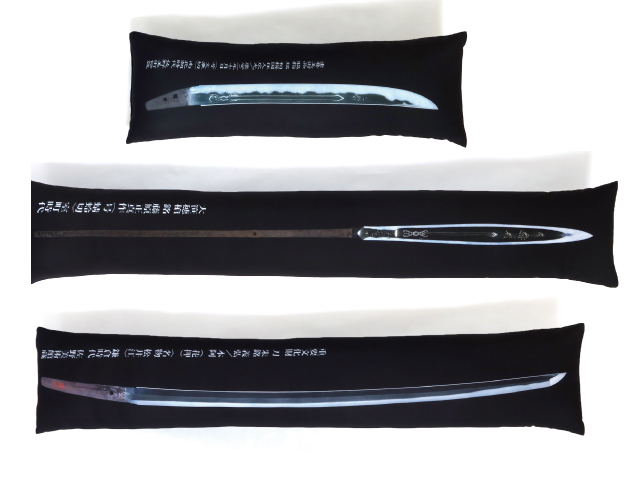
Full-Scale Katana Cushion
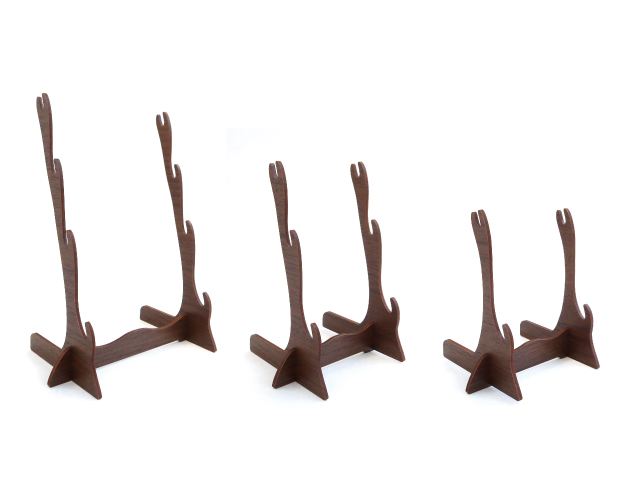
Katana Stand-Style Postcard Display
Related Events
Experience Holding a Japanese Sword
2026.9.12 Sat 15:00–16:30
Applications closed on August 16, 2026 (Sun).
On August 17, 2026 (Mon), we conducted the drawing and sent emails to the winners.
This beginner-friendly workshop offers the rare opportunity to appreciate Japanese swords that have been carefully preserved for centuries. Participants will learn the proper etiquette for handling and viewing swords, and enjoy a quiet moment reflecting on the spirit and craftsmanship of the swordsmiths.
Don’t miss this chance to hold and examine Japanese swords from the Sano Art Museum collection.
Workshop for Children: Experience Holding a Japanese Sword
-We have reached capacity and are now closed to applications-
This workshop allows elementary and junior high school students to handle authentic Japanese swords that have been carefully passed down for hundreds of years. Participants will have the opportunity to experience the proper etiquette and respectful handling of a Japanese sword.
The program is designed for parent–child participation and is open to children from Elementary School 4th Grade to Junior High School 3rd Grade.
Japanese Sword Crafts: Live Demonstrations
October 4, 2026 (Sun) 10:00–15:00
The making of a Japanese sword is supported by the highly skilled work of many specialist craftsmen. These include the togishi (sword polisher), who brings out the beauty of the blade through meticulous polishing; the saya-shi (scabbard maker), who creates a scabbard precisely fitted to the individual sword; the tsukamaki-shi (hilt wrapper), who wraps the hilt with traditional braided cord; and the shirogane-shi (habaki maker), who crafts the habaki, the metal collar essential for securing the blade and protecting it within the mounting. This event offers a rare opportunity to observe some of these traditional crafts and techniques up close.
In addition to live demonstrations of sword polishing, shirasaya making, tsukamaki (traditional hilt wrapping), and habaki making, a swordsmith will also offer mei-kiri (custom engraving), engraving the words of your choice onto a metal plate. Plates are available for an additional fee and are generally limited to six characters. A Japanese sword consultation service will also be available during the event.
Cooperation: The Society for the Promotion of Japanese Sword Culture (NBSK)
The Society for the Promotion of Japanese Sword Culture Event PageIntroduction of the performing members, etc.
Bath salt making workshop
This workshop was organized by volunteers from the Mishima City government.
You can participate in a hands-on experience where you can add a Japanese-style fragrance to bath salts.
In conjunction with the exhibition "Sanobi and Tokubi: The ABCs of Master Swords," this initiative aims to enhance the enjoyment of visitors to the Sano Museum of Art and create lasting memories of their trip to Mishima.
*This program will be conducted on a rotation basis, with approximately 5 participants continuously accepted.
*The workshop will end once the materials run out.
*This event will be held at the same venue as the "Swordsmith Demonstration" at the Sano Museum of Art's Ryusen-en Garden, so please enjoy both events.