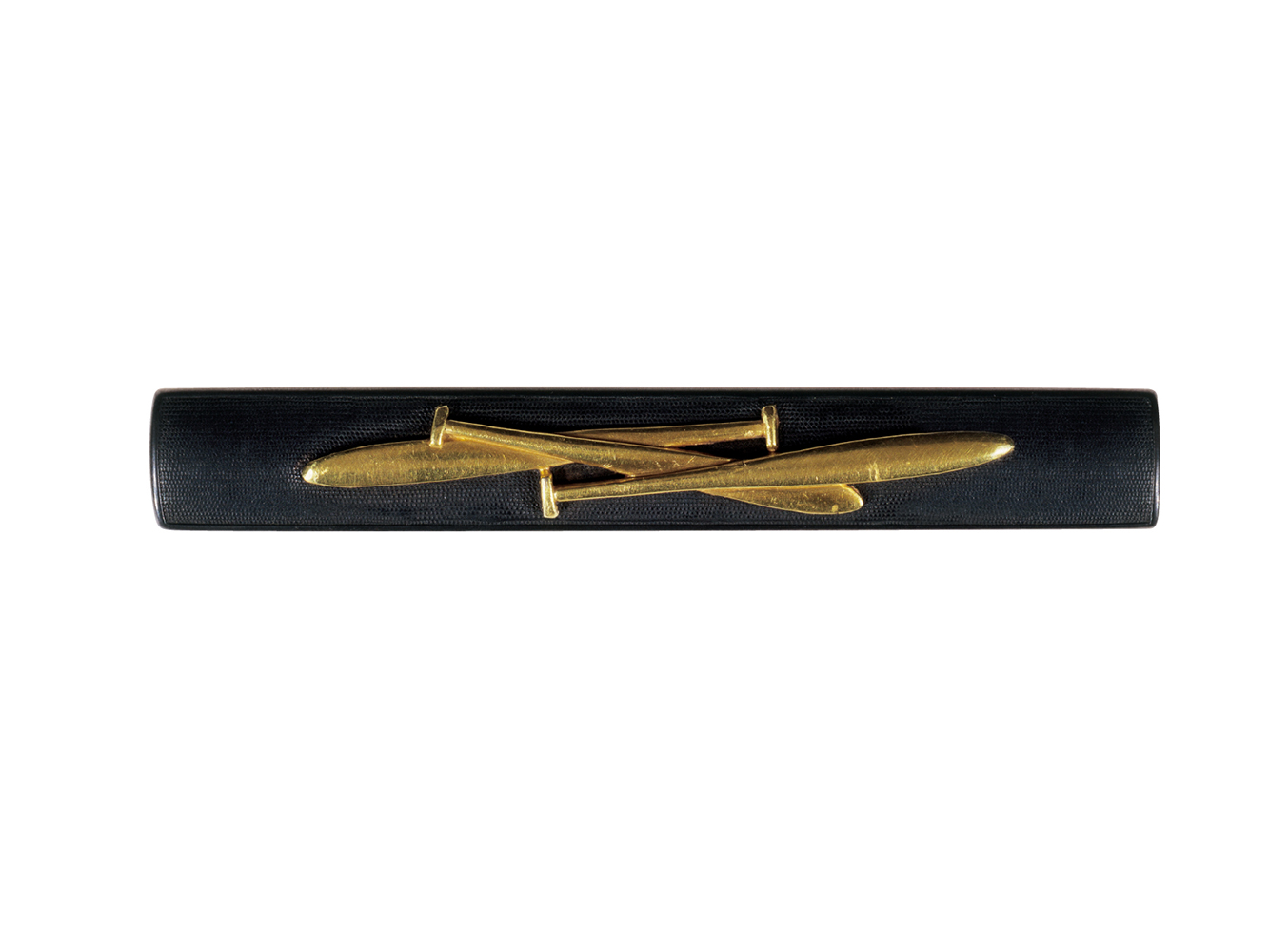
Kozuka with Oar Design, Signed: Yujo saku; authenticated by Mitsumasa (kao)
(Kaizu-kozuka mei Yūjō saku Mitsumasa [kaō]
)
Artist
Goto Yujo
Dates
1440–1512
Country
Japan
Period
Muromachi period (16th century)
Features
Shakudō with a fine nanako ground and applied gold metalwork
Number
1
Dimensions
Length: 9.7 cm
Description
A kozuka, the hilt of a small utility knife mounted in a sword fitting.
This example features three oars rendered in gold on a shakudo nanako ground.
It bears an authentication inscription by Goto Mitsumasa, the ninth-generation head of the Goto family, affirming that the piece is the work of Goto Yujo.
Goto Yujo, founder of the distinguished Goto lineage of metalworkers, moved from Mino to Kyoto and served the Ashikaga shogunate. His refined style and exceptional metalworking skills established the aesthetic standards that the Goto family maintained through the late Edo period.
The piece is accompanied by a box inscription by Kano Natsuo.
Set of Sword Fittings with Kurikara Dragon Motif by Fourteen Generations of the Goto Family
(Gotō-ke jūyondai soroi-kanagu: Kurikara-ryū mitokoromono)
Artist
Fourteen generations of the Goto family, beginning with Goto Yujo (1440–1512)
Country
Japan
Period
Muromachi period (16th century)
Number
14 matched sets
Description
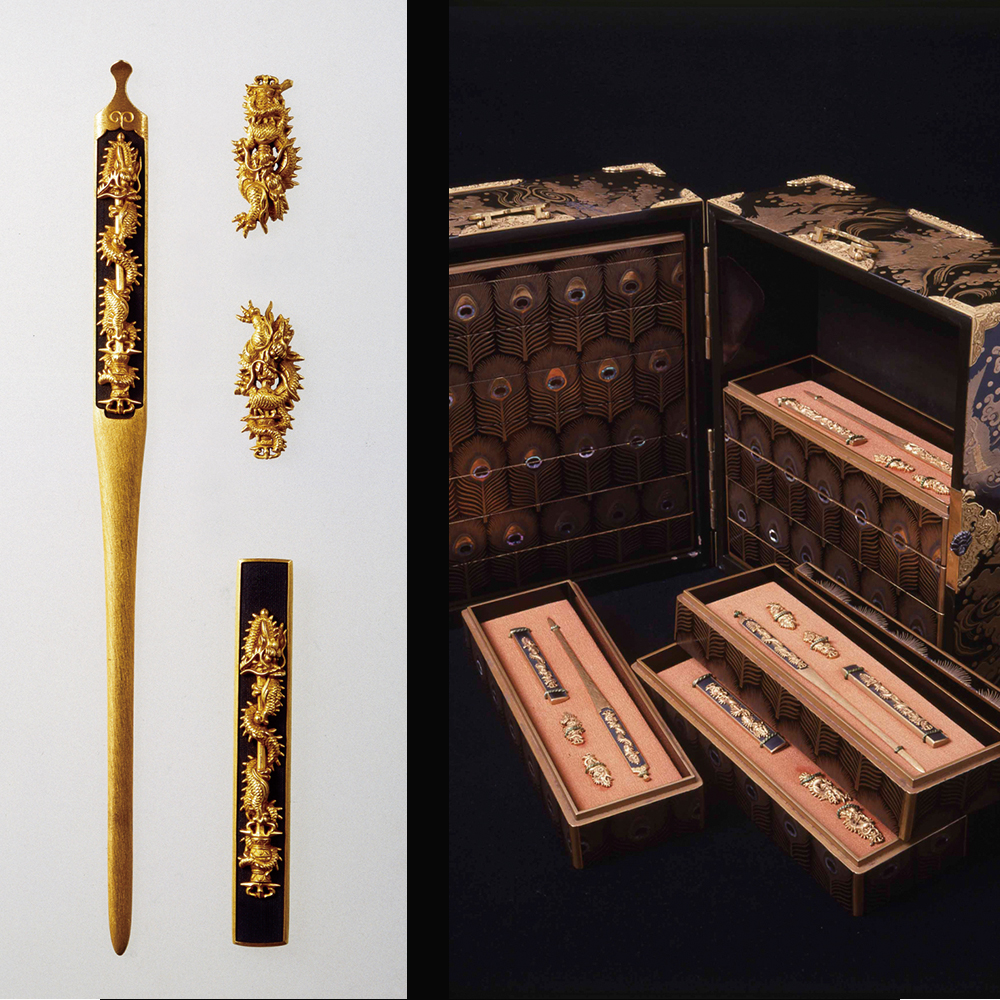
A complete mitokoromono—a matched set consisting of menuki, kozuka, and kogai—decorated with the Kurikara dragon motif.
This set comprises works by fourteen successive generations of the Goto family, from the founder Goto Yujo to the fourteenth master Goto Keijo.
Such a comprehensive assemblage represents a type of daimyo accoutrement, and this example was collected by the Toba-Inagaki family.
Openwork Tsuba with Moonlit Water Design, unsigned, attributed to an armorer (katchushi)
(Tsukikage sukashi tsuba mumei katchūshi)
Country
Japan
Period
Muromachi period (16th century)
Features
Round iron plate; forged
Number
1
Dimensions
Diameter: 9.5 cm
Description
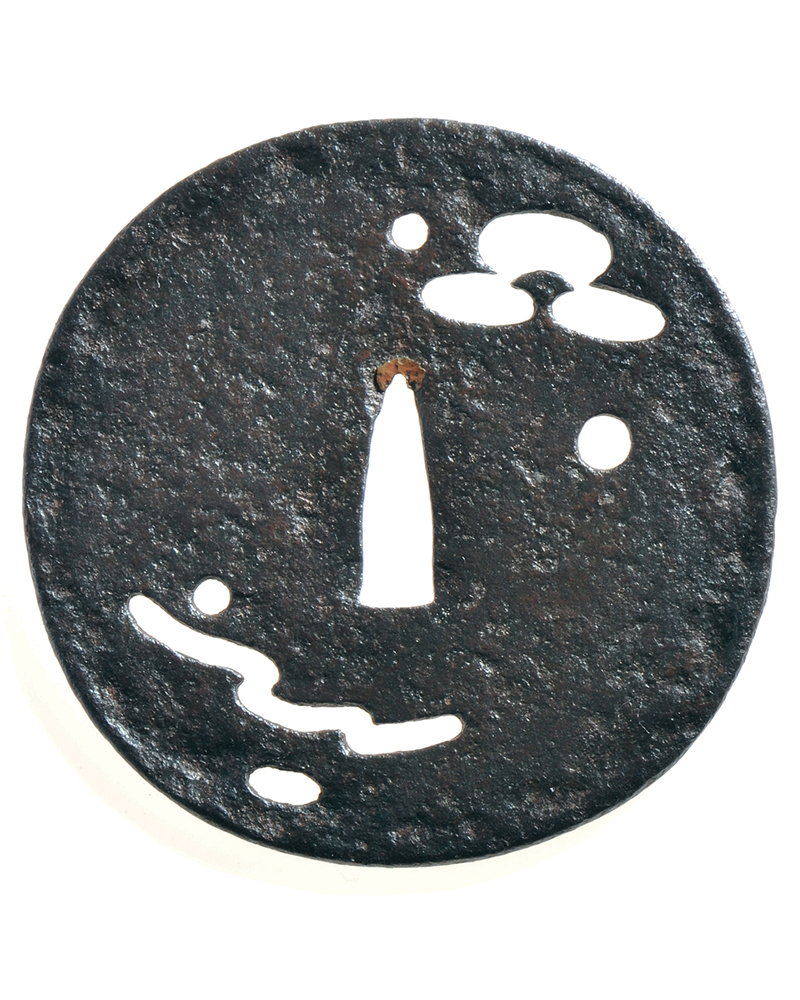
This thin, large iron tsuba features an abstract openwork depiction of moonlit water.
Although tsuba originated as protective sword fittings—examples survive as early as the Kofun period—their independent appreciation as works of art developed primarily with the uchigatana from the Muromachi period onward.
The aesthetic qualities of early iron tsuba made by swordsmiths and armorers, the refined design of openwork patterns, and the pictorial effects created through inlay with brass and other metals contributed to a uniquely Japanese art form enjoyed in the palm of the hand.
The period from the mid‑Edo era to the end of the shogunate was particularly vibrant, with specialist tsuba artisans competing in skill and innovation.
Tsuba with Pagoda, Bridge, and Floral Design, unsigned, attributed to the Kamakura school
(Tō hashi hana zu tsuba mumei kamakura)
Country
Japan
Period
Muromachi period (16th century)
Features
Round iron plate; forged
Number
1
Dimensions
Diameter: 8.9 × 8.7 cm
Description
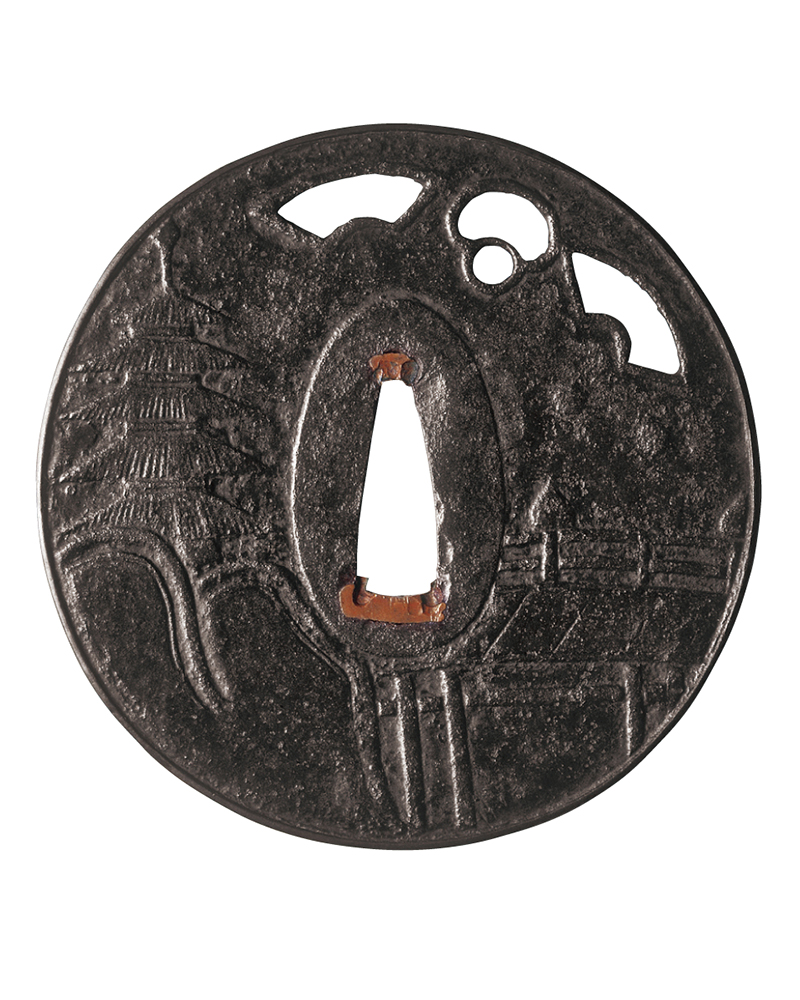
This iron tsuba features a relief depiction of a multi‑storied pagoda and a bridge on the obverse, with flowers carved on the reverse.
Two fan‑shaped openwork elements and a kukurizaru motif appear on the shoulders of the guard.
The piece is associated with the so‑called “Kamakura” style, named for its resemblance to Kamakura‑bori carving.
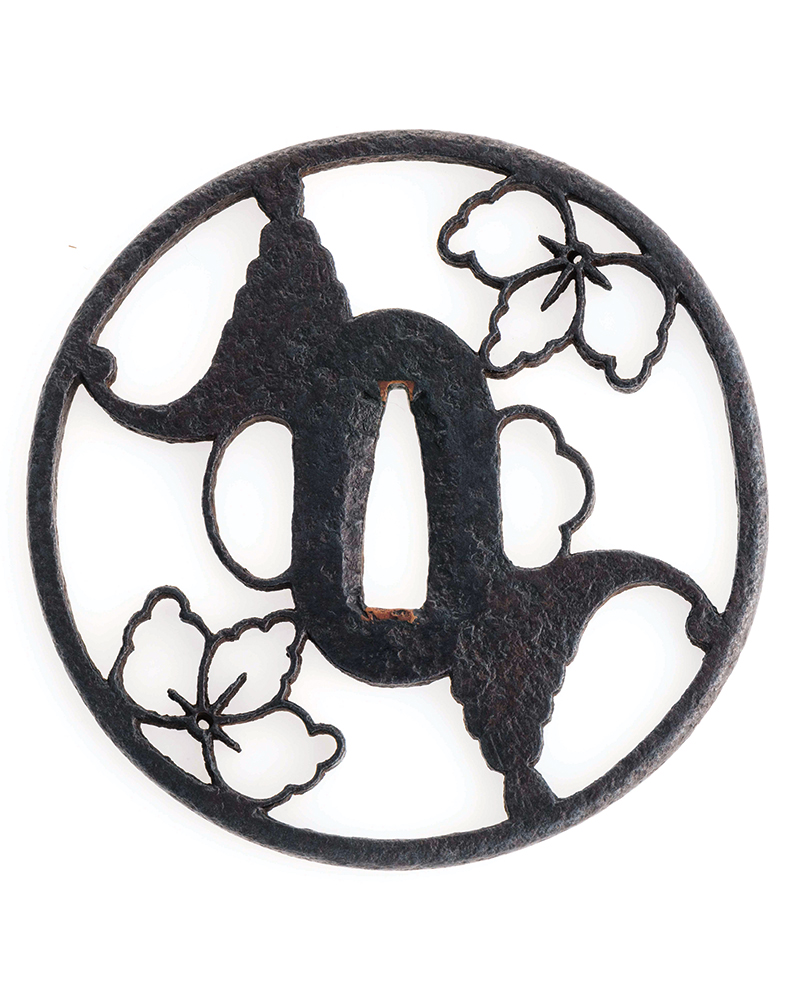
Openwork Tsuba with Ginger and Ivy Design,
unsigned, attributed to the Owari school
(Myōga tsuta sukashi tsuba mume Owari)
Country
Japan
Period
Edo period (17th century)
Features
Round iron plate; forged
Number
1
Dimensions
Diameter 8.3 cm
Description
The Owari school is regarded, alongside the Kyoto openwork tradition, as one of the two leading schools of sukashi‑tsuba (openwork sword guards).
This iron tsuba features ivy leaves rendered in outline and a myoga (Japanese ginger) motif expressed through carved relief and fine line engraving.
In Japanese belief, myoga is associated with the word myoga (冥加), meaning divine protection, and is thought to ward off evil influences.
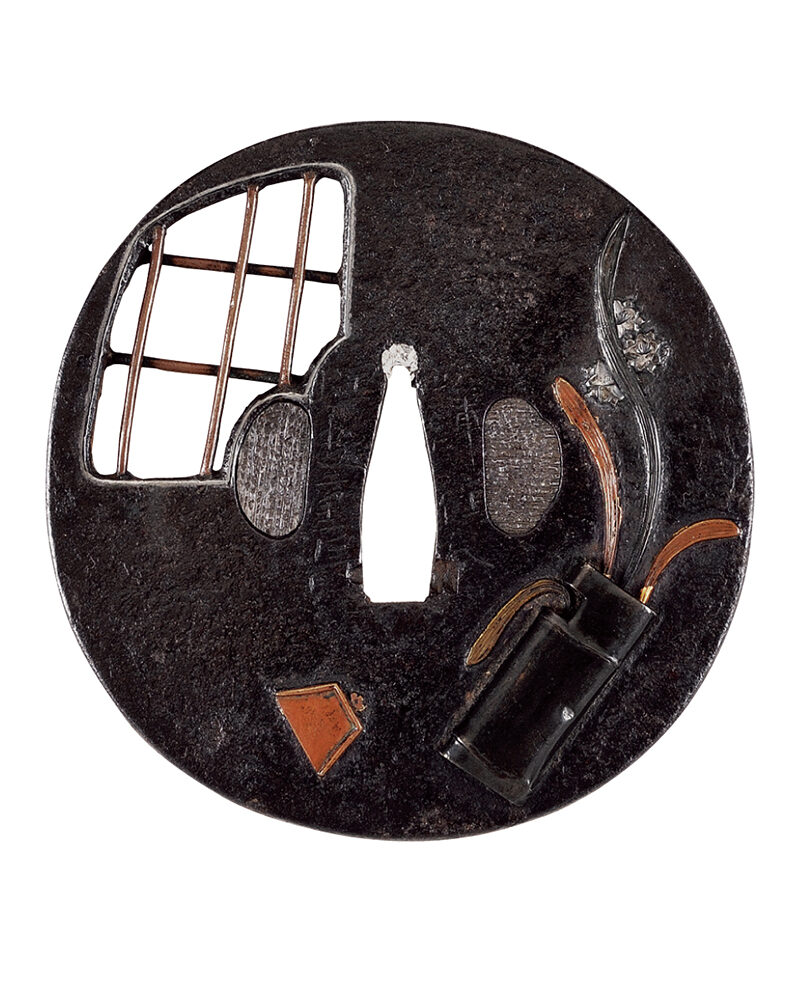
Tsuba with Tea‑Room Utensils Design, signed: Nishijin-junin Umetada Shigenaga
(Cha seki zu tsuba mei Nishijin-junin Umetada Shigenaga)
Artist
Umetada Shigenaga
Country
Japan
Period
Edo period (17th century)
Features
Round iron plate; forged
Number
1
Dimensions
Diameter: 8.8 × 8.6 cm
Description
This iron tsuba features an openwork lattice window, with tea‑ceremony utensils inlaid on both sides, including a single‑cut bamboo flower vase holding narcissus, a dustpan, a feather broom, and metal rings. The refined and elegant composition evokes the quiet atmosphere of a tea room. Shigenaga was a tsuba maker of the Umetada school based in Nishijin, Kyoto, and the third‑generation successor to the school’s founder, Umetada Myoju.
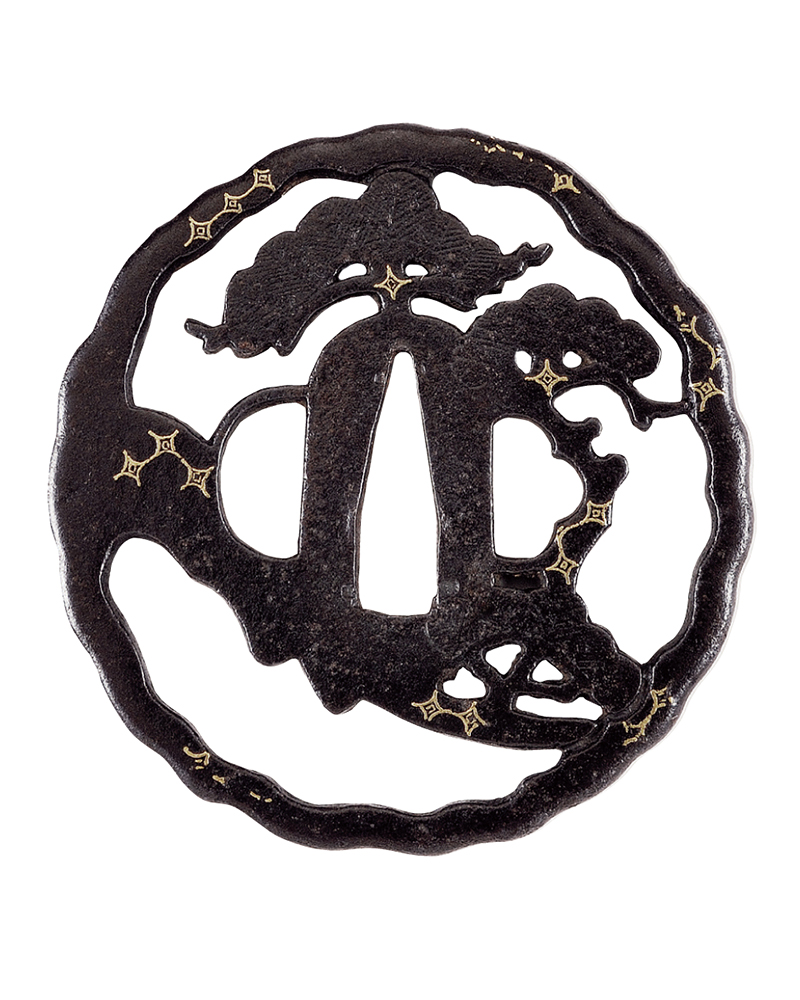
Openwork Tsuba with Pine‑Tree Design, unsigned, Hayashi school
(Matsu‑ju sukashi tsuba mumei Hayashi)
Artist
Hayashi
Country
Japan
Period
Edo period (17th century)
Features
Irregular‑shaped iron plate; forged
Number
1
Dimensions
Diameter: 8.2 cm
Description
This iron tsuba depicts stylized triple‑layered pine trees, with the outline of the guard itself shaped to resemble the trunk. Gold inlay in a kuzuhishi‑tsunagi (interlinked arrow‑feather lozenge) pattern is applied in several areas. The Hayashi school, active in Higo from the time of the first master Matashichi, who served the Hosokawa family, developed a distinctive style characterized by refined openwork and delicate nunome‑zōgan (textile‑pattern metal inlay) executed on high‑quality iron.
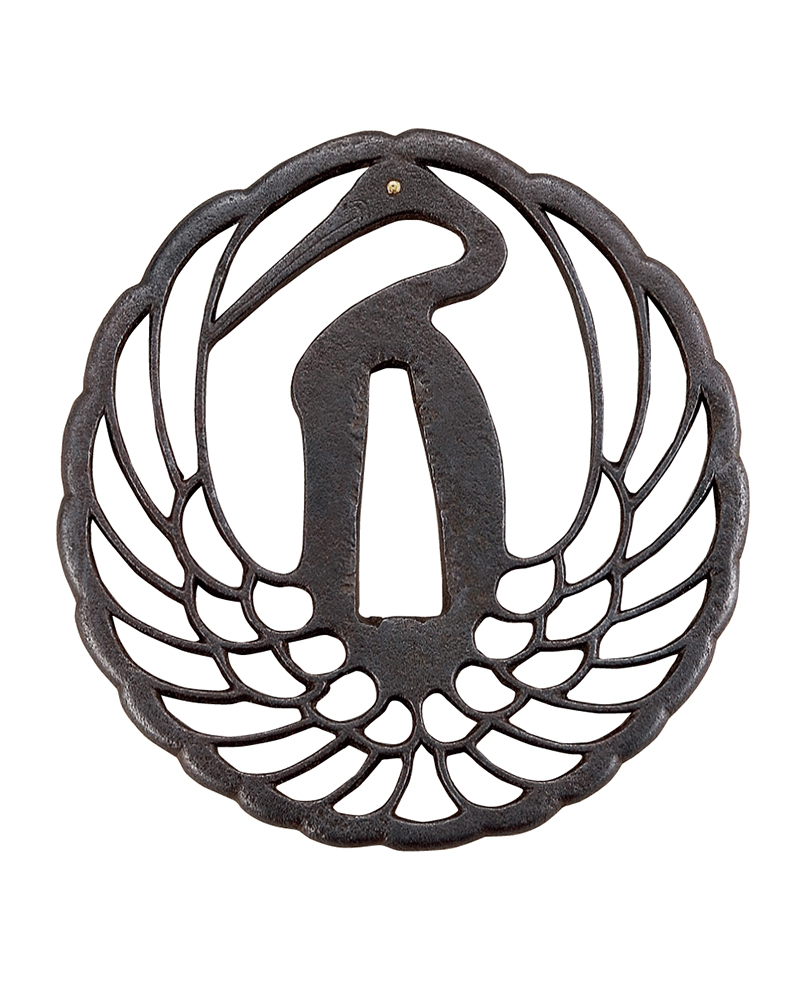
Openwork Tsuba with Crane‑Round Design, unsigned
(Tsuru‑maru sukashi tsuba mumei)
Country
Japan
Period
Edo period (17th century)
Features
Irregular‑shaped iron plate; forged
Number
1
Dimensions
Diameter: 8.2 cm
Description
This iron tsuba features a stylized crane with outstretched wings, forming a circular “crane‑round” motif in openwork. Gold inlay highlights the eyes, while the beak is rendered with fine kebori (hairline engraving).
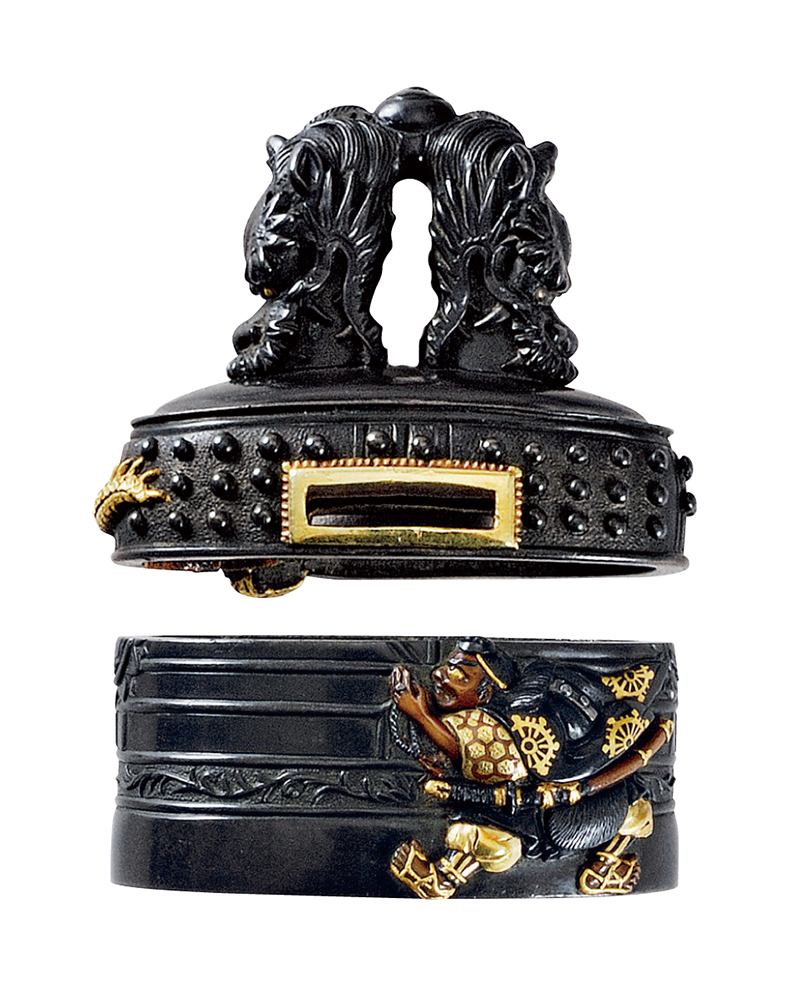
Fuchi‑gashira with Dojoji Design, signed: Omori Teruhide (kao)
(Dōjōji‑zu fuchi‑gashira mei Ōmori Teruhide [kaō]
)
Artist
Omori Teruhide
Dates
1730–1798
Country
Japan
Period
Edo period (18th century)
Features
Fuchi: shakudō with applied decoration
Kashira: shakudō katachibori (sculptural carving)
Number
1 set
Dimensions
Fuchi: 3.9 × 2.4 cm
Kashira: 3.5 × 2.0 cm
Description
The rim is a metal part that covers both ends of the handle of a sword. The part on the tsuba side is called the rim, and the part on the pommel side is simply called the head.
The fuchi‑gashira are fittings that cover both ends of a sword hilt: the guard‑side fitting is the fuchi, and the pommel‑side fitting is the kashira. This set depicts a scene from Dojoji, the famous Noh and Kabuki drama based on the legend of Anchin and Kiyohime.
The kashira, in shakudo with high‑relief carving and colored metal details, represents the exaggerated temple bell entwined by the serpent’s tail. The fuchi features a relief inlay of Anchin in the guise of a mountain ascetic. Omori Teruhide, the second master of the Omori school, was an Edo‑based metalworker renowned for his refined carving and dynamic compositions.
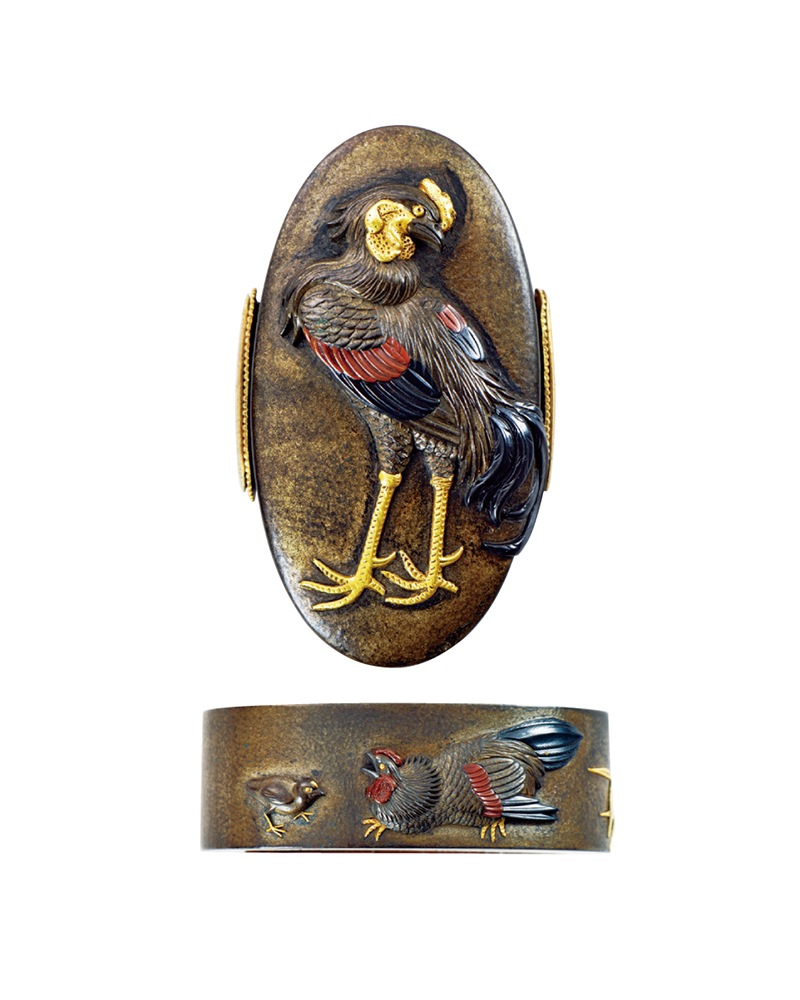
Fuchi‑gashira with Rooster Design, signed: Ishiguro Masaaki (kao)
(Tori‑zu fuchi‑gashira mei Ishiguro Masaaki [kaō]
)
Artist
Ishiguro Masaaki
Dates
1813–?
Country
Japan
Period
Edo period (19th century)
Features
Shibuichi with stone‑texture surface; high‑relief inlay
Number
1 set
Dimensions
Fuchi: 3.9 × 2.5 cm
Kashira: 3.5 × 2.1 cm
Description
This fuchi‑gashira set is crafted in shibuichi—a silver‑copper alloy—with a stone‑texture ground, and features roosters rendered in high‑relief inlay using metals of various colors. Ishiguro Masaaki, a distinguished master of the Yokoya lineage and a pupil of Ishiguro Masatsune, founder of the Ishiguro school, worked in Edo and excelled in richly decorative high‑relief carving with colored metal details.
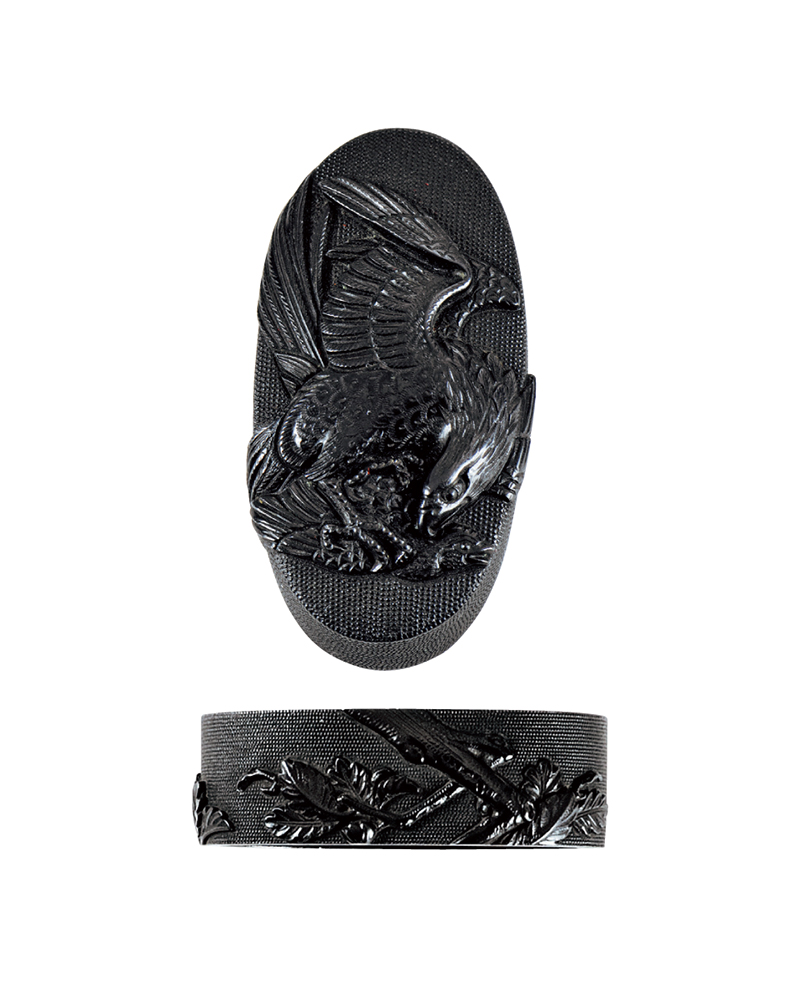
Fuchi‑gashira with Hawk Seizing Pheasant Design, signed: Tsujinpo
(Yōsoku‑kiji‑zu fuchi‑gashira mei Tsujinpo)
Artist
Tsujinpo
Dates
1721–1762
Country
Japan
Period
Edo period (18th century)
Features
Shakudō with nanako ground; high‑relief carving
Number
1 set
Dimensions
Fuchi: 3.9 × 2.4 cm
Kashira: 3.4 × 1.6 cm
Description
This fuchi‑gashira set is crafted in shakudo with a fine nanako (fish‑roe) ground. The kashira features a hawk gripping a branch with powerful talons, its wings spread and gaze fixed sharply forward, carved in dramatic high relief so that the bird appears almost to leap from the surface. The fuchi depicts the branches of a kashiwa (oak) tree in similarly bold relief. Tsujinpo was a master craftsman in Edo. He studied under Nomura Masamichi.
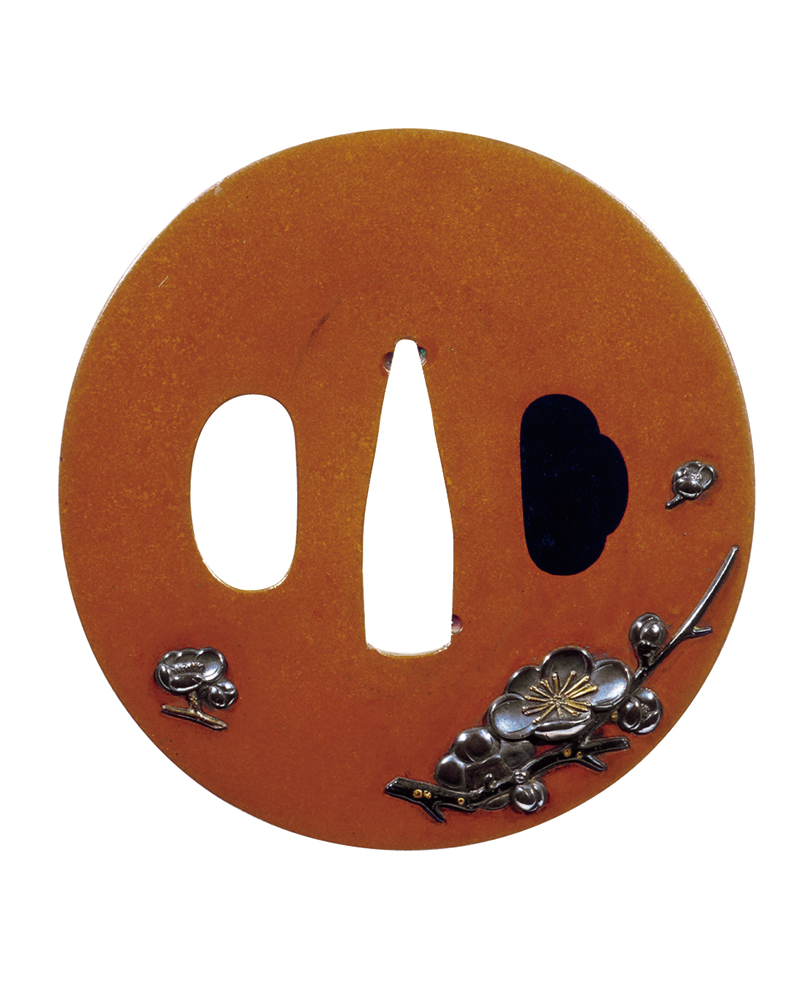
Tsuba with Plum Blossom Design, Signed: Nagatsune (kao)
(Edame-zu tsuba mei Nagatsune [kaō])
Artist
Ichinomiya Nagatsune
Dates
1721–1786
Country
Japan
Period
Edo period (18th century)
Features
Polished copper ground; high-relief carving with colored metal inlay
Number
1
Dimensions
Diameter 6.4 cm
Description
Gold, silver, and shakudō are worked in high relief with applied and inlaid decoration on a polished copper ground. Plum blossoms are elegantly arranged on both sides, making refined use of the open space.
Ichinomiya Nagatsune, a master sword‑fittings artisan born in Echizen and active in Kyoto, studied painting under Ishida Yūtei, the teacher of Maruyama Ōkyo. Renowned for his realistic designs, he was regarded as highly as Sōmin in Edo.
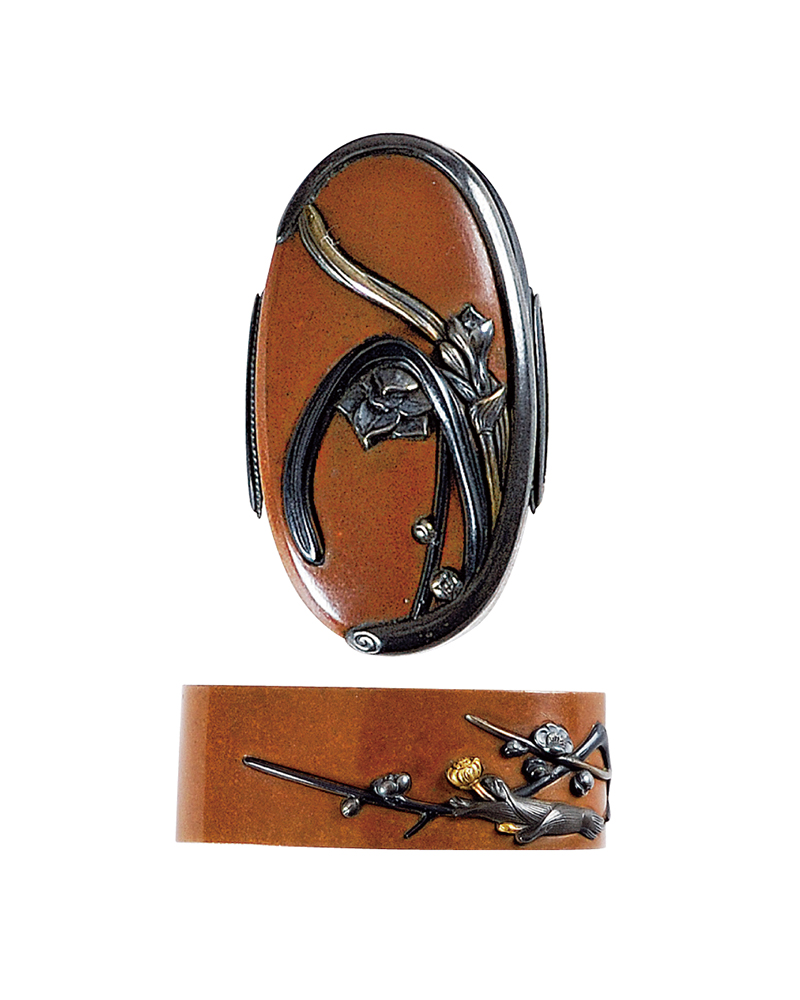
Fuchi-gashira with Plum Blossom and Narcissus Design, Signed: Ichinomiya Nagatsune (kao)
(Edame suisen zu fuchi-gashira mei Ichinomiya Nagatsune [kaō])
Artist
Ichinomiya Nagatsune
Dates
1721–1786
Country
Japan
Period
Edo period (18th century)
Features
Polished copper ground; high-relief carving with colored metal inlay
Number
1 set
Dimensions
Fuchi: 3.5 × 2.0 cm
Kashira: 3.2 × 1.8 cm
Description
Gold, silver, and shakudō are worked in high relief with applied and inlaid colored‑metal decoration on a polished copper ground. The straight lines of the plum branch on the fuchi contrast beautifully with the graceful curves of the narcissus leaves on the kashira.
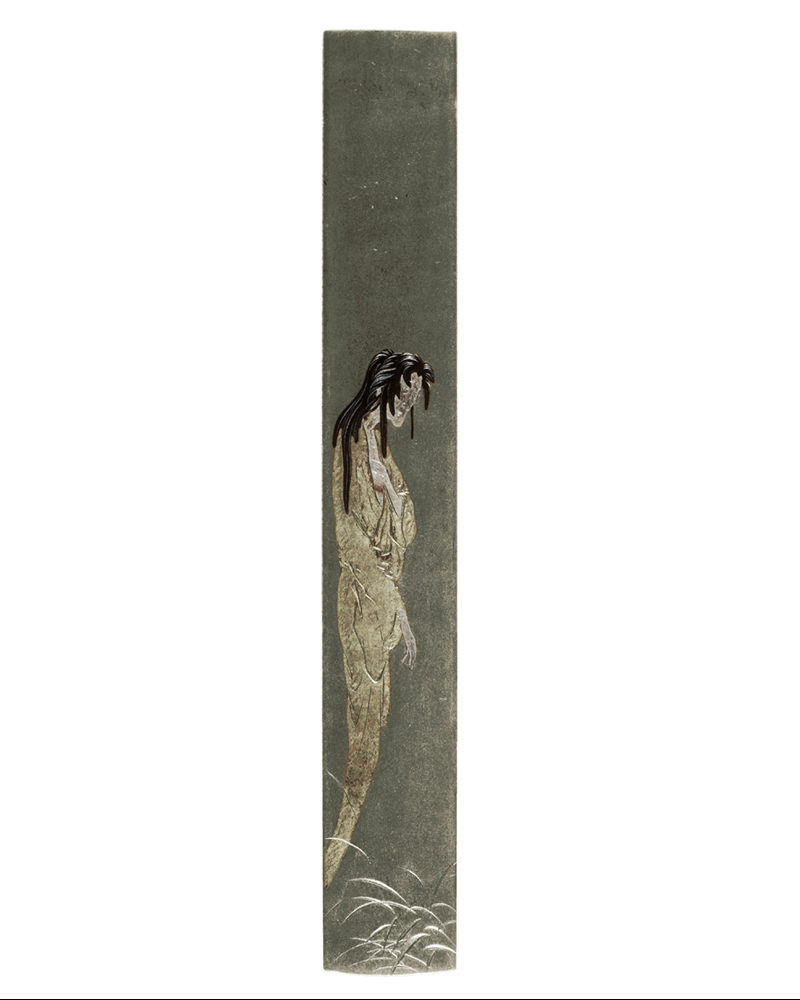
Kozuka with Ghost Design, Signed: Natsuo koku
(Yūrei-zu kozuka mei Natsuo koku)
Artist
Kano Natsuo
Dates
1828–1898
Country
Japan
Period
Edo period, 1864
Features
Shibuichi ground with flat inlay
Number
1
Dimensions
Length 9.6 cm Width 1.4 cm
Description
A legless ghost emerges in the faint moonlight. Rendered on a shibuichi ground in flat inlay and accented with copper, silver, and other metals, the figure’s kimono folds, hair, and somber expression are all conveyed through katakiribori (one‑sided chisel engraving). A willow tree is carved on the reverse in the same technique. Within a space of less than ten centimeters, this masterpiece evokes even the atmosphere of the night using metal alone.
Kano Natsuo was a leading metalworker of the late Edo and Meiji periods. He produced sword fittings until the early Meiji era and later became one of the first Imperial Household Artists. He also served as a professor at the Tokyo School of Fine Arts, where he trained many successors. Emphasizing sketching from life, he developed a distinctive style noted for its lively and highly refined depictions of flora and fauna.
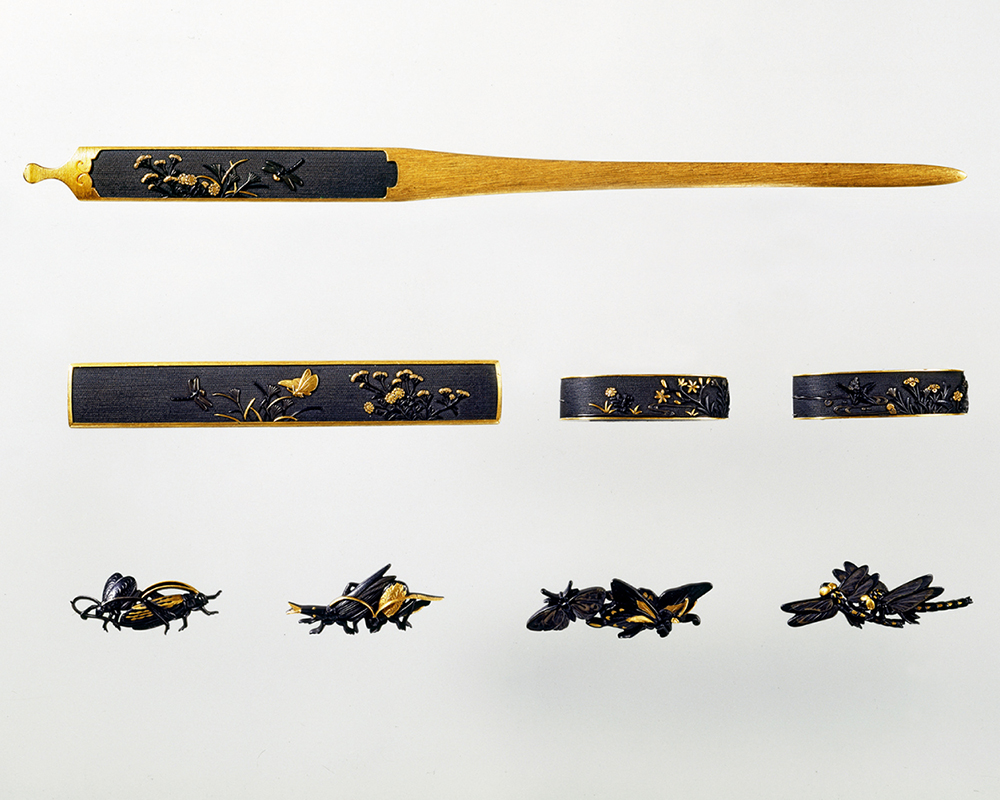
Set of Sword Fittings with Autumn Grasses and Insects Design
(Akikusa mushi-zukushi zu soroi daishō kanagu)
Artist
Goto Ichijo
Dates
1791–1876
Country
Japan
Period
Edo period (19th century)
Features
Kōgai, kozuka, and fuchi: shakudō with nanako ground and high‑relief applied decoration
Menuki: shakudō katachibori (sculptural carving)
Number
1 set
Dimensions
Kōgai: length 21.3 cm
Kozuka: length 9.5 cm
Fuchi: 2.1 × 3.9 cm
Menuki (dragonfly): 1.5 × 4.3 cm
Description
This matched set consists of a kozuka, a kōgai, paired fuchi, and two pairs of menuki, all unified by motifs of autumn grasses and insects. The kozuka, kōgai, and fuchi are decorated with chrysanthemums, pampas grass, and ominaeshi, among which dragonflies and butterflies move gracefully. These motifs are rendered in high‑relief applied decoration on Ichijo’s characteristically fine and evenly arranged shakudō nanako ground. The two pairs of menuki depict butterflies, dragonflies, bell crickets, crickets, and grasshoppers in shakudō katabori (sculptural carving), executed with naturalistic delicacy. Goto Ichijo was the last great master of the Goto family, a distinguished lineage of metalworkers that had served the shogunate since the Muromachi period. Gifted also as a painter, he combined the traditional dignity of the Goto style with his own elegant and poetic pictorial sensibility. Alongside Kano Natsuo, he is regarded as one of the leading metalworkers of the late Edo and early Meiji periods.